



Grocery Labor Economics 101.
Grocery store labor is essential to our food supply.
The folks who receive product, stock shelves, ring up customers, manage departments and mop the floors, work long hours and rarely get paid living wages that keep up with the rising cost of everything. But even despite all this new A.I. and digital technology, nothing in stores happens without them.
While grocery labor should be treated as a store’s greatest asset, the jet fuel that keeps it all going, in P&L (profit and loss) terms, labor is also the second largest element of cost after the wholesale cost of goods (COGs). Grocers, who typically run profit margins at 1-5% of revenue, are always looking at how to control labor expenses while keeping stores running and enjoyable for customers, putting tremendous pressure on employees to work more efficiently and productively.
Grocery store labor, at the enterprise level perspective, is the largest variable expense for grocers.
Unlike other regular line item expenses, grocery labor can vary from day to day and month to month. Rent is fixed for a timeframe. Utilities are relatively stable. IT and infrastructure costs, predictable. But people? Calling out sick, clocking in early or late, getting raises, getting fired, missing shifts, getting overtime. Shit happens. Concerts or public events, weather emergencies, mass shootings. Huge variables that impact scheduling, how many folks are needed on the sales floor, who is needed to stock products or ring up customers.
This unpredictability, overlaid with the essential nature of grocery work, runs head on into a marketplace where grocers are competing for customers amidst declining consumption patterns and bifurcated or K-shaped consumer spending, while facing both rising costs (inflation) and downward retail pricing pressure from discounters and mass merchants. Labor expenses can make or break the business. And for clerks and cashiers, this can impact what they take home to pay the bills, feed the kids, take care of aging relatives or how much they can allocate to just have some fun and enjoy life.
So how does grocery labor actually work? And how does this math impact the lives of grocery workers and the prices that customers pay?
Math: Understanding Gross Margin.
The gross margin of a grocer is the total of all costs above the wholesale costs of goods of the products they sell. These include labor/benefits, utilities, rent, taxes, admin, IT, amortization, shrink and maybe some profit. It is stated as a percentage, or as cents on the dollar.
Gross margin= ((Revenue minus COGs)/Revenue) X 100.
Gross margin at the item level= (retail price minus cost)/retail price x 100.
Gross margin is also different from markup, but there are formulas to convert between the two: Markup= (retail price minus cost)/cost X 100
Gross margin to markup conversions:
Gross margin= Markup/1 + Markup
Markup = Gross margin/1 - Gross margin
And markup is always higher than the corresponding gross margin.
Gross Margins At Retail.
Walmart’s U.S.-enterprise wide gross margin is around 27%. Kroger’s is around 23%. Sprouts, food co-ops and Whole Foods, around 36%. Costco, 13% (UNFI, a wholesaler, is also around 13%). Trader Joe’s, around 27%. ShopRite, around 30%.
This means that for every dollar of food they sell, 27 cents goes into funding all of those store and corporate operations at Walmart, 23 cents at Kroger, 36 cents at Sprouts, 13 cents at Costco, etc. This is also why scale is so important. Walmart rakes in billion in profit because while it’s profit margin is usually around 1-2% of sales (or 1 cent on the dollar), it brings in over $170 billion in U.S. sales every quarter. Sprouts ran record profits a few quarters ago, with net income around 8% of sales. Unsurprisingly, sales tanked the next quarter, as nearly 4% of profits were inflation driven and customer transactions soon dropped off.
Gross margin dollars can also overcompensate for low gross margin percentages if the topline sales dollars are really high. Or high gross margins can mean prices are too high, impacting product sales, something that happens at smaller gourmet or convenience stores desperate to cover their costs even though they don’t sell much product. We used to say you don’t take margin to the bank, but many grocers incentivize management performance bonuses through gross margin percentage performance, not gross margin dollars, which can be a problem when price competition and higher costs, including labor, pressure those margins.
Labor As A Percentage of Sales.
Labor is the largest chunk of grocers’ gross margins above their wholesale cost of goods. Labor can also be expressed as a percentage of overall sales (revenue), and like margins, this varies widely at grocers. In its “Whole Paycheck” heyday, pre-Amazon, Whole Foods’ labor as a percent of sales was nearly 20%, or 20 cents on the dollar, or 55% of the total gross margin above wholesale costs. Whole Foods labor rates are likely a lot lower now, after years of layoffs and store-level cutbacks. Most co-ops and natural/specialty stores hover in the 13-15% range, meaning for every dollar of groceries you buy, 13-15 cents goes to all the labor in the store. Most full service, large scale supermarkets are around 10-12%, especially if they are unionized. Something to think about when you see folks stocking shelves.
At mass merchants like Walmart, these numbers are even lower, around 8-9% and at discounters like Aldi, more like 6%. Costco, which is a wholesale operation open to the public and charges membership fees which feed nearly 50% of its bottom line, labor as a percent of sales is even lower, around 3%. Keep these rates in mind when you think about the pricing at these stores and who is cheaper and why. Each percent of labor saved is typically folded into lower prices, so if Aldi is running labor 20% below Walmart, that is consistent with how much cheaper than Walmart they are. Or Costco, which typically prices products at 40 cents on the dollar (relative cost per ounce or per unit) compared to most supermarkets. You can’t out-Costco Costco. And only Lidl can out-Aldi Aldi, at least some of the time.
Most Grocery Stores Allocate Labor Dollars By Department.
This means that ambient and frozen grocery, dairy, produce, meat and seafood, deli and bakery, health and beauty aids and general merchandise will have different labor needs that are broken out as a percent of their departmental sales. And then cashiers/guest services will have labor dollars allocated as percent of the store’s total sales, typically around 15-20% of all store labor. Some discounters, like Trader Joe’s, Aldi and Lidl, do not do this, and they rotate folks throughout the store depending on where staffing is needed.
Center Store.
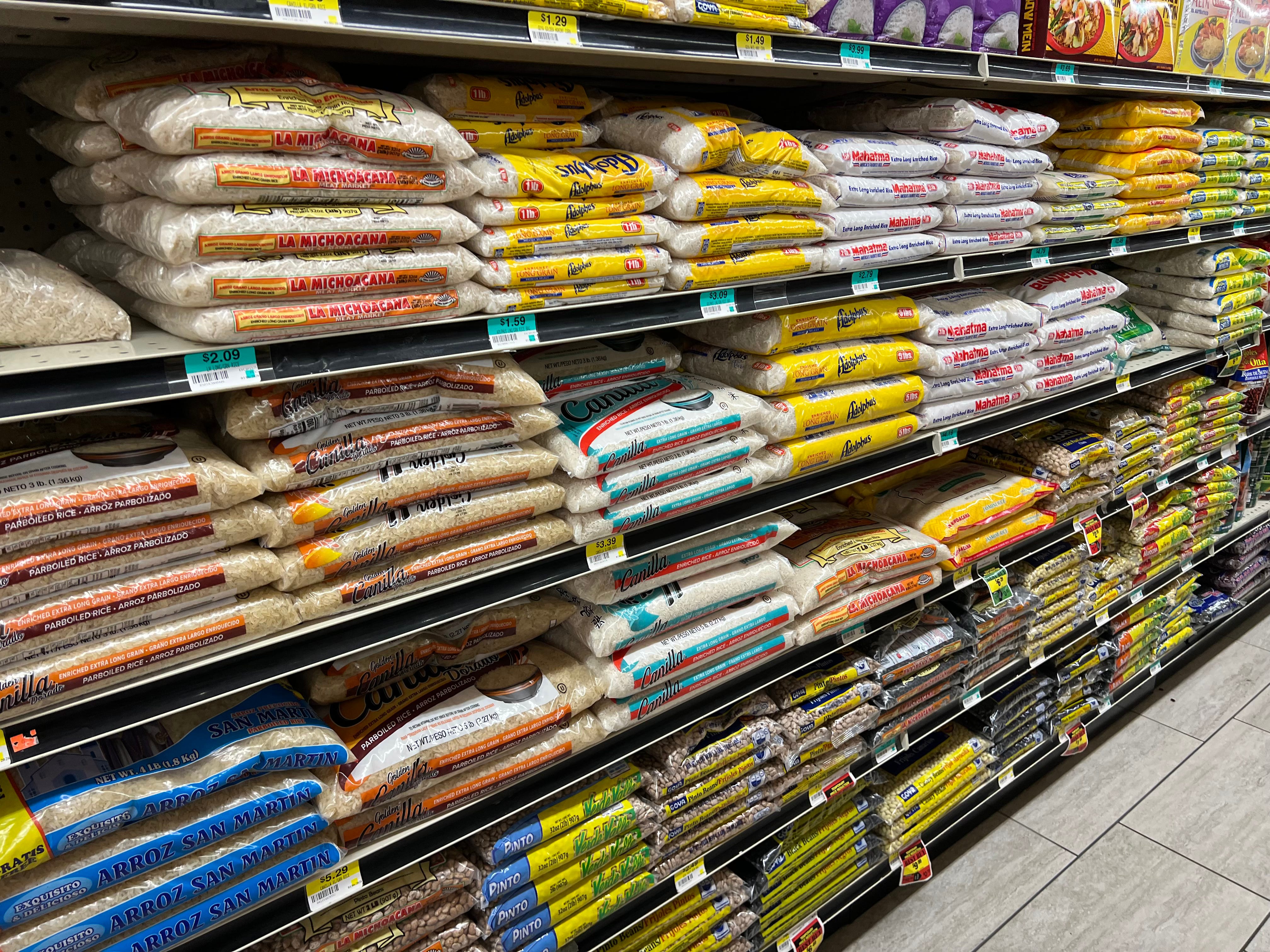
Grocery, dairy and general merchandise departments, which primarily sell thousands of non-perishable or semi-perishable consumer packaged goods, are high product volume, high sales and low margin departments, with proportionately low labor rates. This means that grocery and dairy clerks must be extremely efficient and productive in working their departments. They also have low shrink budgets and all products, especially in dairy, must be date checked and rotated and kept chilled is frozen or refrigerated. Labor as a percentage of sales in grocery and general merch is typically 3-5%. That means for every box of cereal, roll of T.P., carton of milk or tin of sardines you buy, only a few pennies on the dollar pay for all the labor and benefits of workers and managers in these departments. It is all about productivity in center store.
And because center store departments typically make up 40-50% of total store sales, grocery store business models are wholly dependent on them, and their sets and endcaps filled with processed and ultra processed fast moving consumable nom noms like chips, cereals, ice cream, chocolate almond milk, sandwich crème cookies, frozen pizza and Greek yogurt. Take away the UPFs and you have no grocery store. That is the math, all based on the extremely efficient and draconian labor budgeting in center store departments.
The rest of the store balances its labor needs on the backs of such grocery clerks who must stock out 75-110 cases an hour, just to stay employed and keep the department labor as a percentage of sales as low as possible. This logic extends to health and beauty aids departments, with the caveat being the gross margins (and retail markups) are typically much higher in supplements and body care, while the labor budget rates are along the lines of grocery.
Grocery and center store labor has also been a target of various technological innovations aimed at reducing labor needs, from the introduction of UPCs, which eliminated (or greatly reduced) the need to hand price products, to the introduction of electronic shelf labels (ESLs), where thousands of prices can be changed instantaneously instead of several clerks running around all day changing them out by hand. ESLs have been under renewed scrutiny for exploiting consumers as well, with retailers being accused of using them for surge pricing, surveillance pricing and various other forms of price manipulation which we will be covering in a future newsletter. Grocery unions like UFCW have been leading the charge against such price shenanigans, because at their heart, they are a labor suppression strategy first.
Produce.
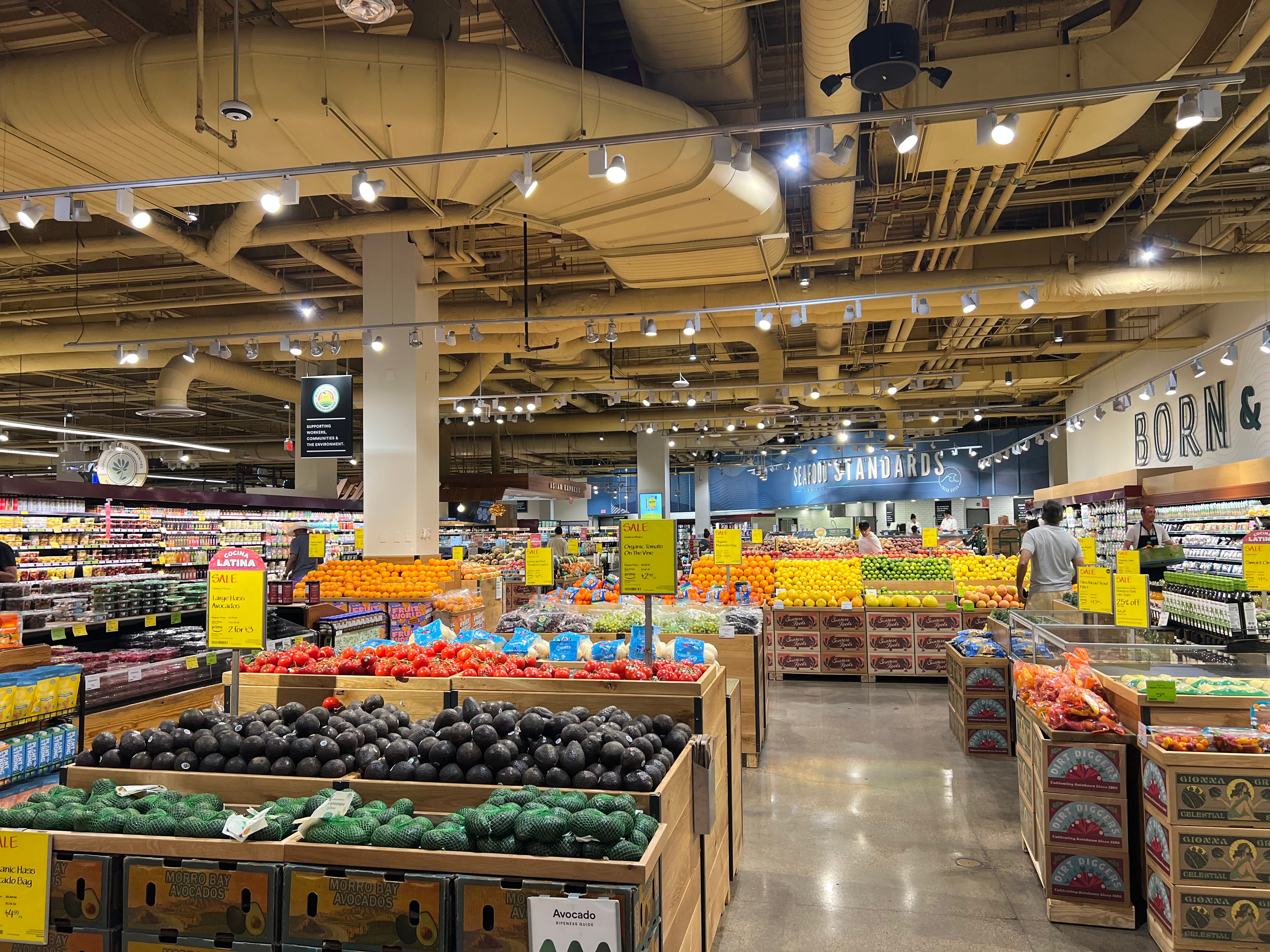
The produce department is usually the next highest product sales department, typically 10-20% of store sales. Produce gross margins are higher than grocery because produce shrink is much higher, usually 5-10% of sales. Produce labor is typically also higher, usually 5-8% of sales. This means that the skilled produce clerks must stock out, rotate, price and beautify all those bountiful bundles of brix content very quickly and neatly. Produce is a different business model than grocery, but no less challenging. Produce departments have a fraction of the SKUs (stock keeping units) of grocery, but they are much more prone to seasonality, availability, freshness, quality and appearance variability, spoilage, and “sell it or smell it” sensibilities.
Produce is used as a customer acquisition strategy as well as visual and sensory leader. A fresh, well-stock produce department leaves a huge positive customer impression, but on the other hand, it only takes one bad apple to spoil a whole display. And no customer wants to buy that bad apple.
Meat Meat Meat.
Meat and seafood departments make up another large part of what grocers call “the perimeter” departments. Meat and seafood are high dollar basket builders that usually bring in around 10% of store sales, and are heavily featured in ads and marketing. They are high gross margin departments due to the large shrink budgets they need. Meat and seafood departments can either be full service sections with skilled butchers and fishmongers, like at neighborhood specialty shops. Or they can be hybrids, with a stocked out, staffed up fresh case, alongside several displays of self-serviced, pre-packaged or frozen meat and seafood. Or, like at Walmart, Trader Joe’s or Aldi, they can be fully self-serviced, with no skilled meatcutters or fish wranglers on the sales floor.
Walmart used to have full service meat cases, but then some butchers unionized, so Walmart fired them and out of spite (and the resulting labor savings), eliminated ALL full service meat cases. As Billy Butcher, anti-hero of The Boys would say, “Diabolical.” This labor savings, in eliminating skilled meat and seafood clerks and instead outsourcing packing to the likes of Tyson, JBS or Smithfield, was a decision with huge material benefits to Walmart’s bottom line and their ability to compete on price.
Meat and Seafood labor as a percent of sales for full service and hybrid departments are typically in the 15-20% range. Meatcutters can be skilled, highly paid workers that take decades to master their craft. Taking butchers and fishmongers off the board reduces department labor rates by at least 10%, down to the rate of a grocery department. Amortized across the enterprise, this could mean up to 2% lower labor spend that can either be reinvested as lower prices or more likely, pocketed by shareholders as profit dividends.
Seen another way, de-skilling labor via self-serve perimeter departments shave costs and therefor reduce retail prices relative to full service or hybrid models. Such de-skilling also eliminated the jobs of many journeyman and master butchers and fishmongers, while also supercharging the use of Styrofoam trays and shrink wrapped, vacuum sealed pre-packaged proteins. Gone are the days when your local butcher would wrap freshly cut meat in yesterday’s newspaper. As retailers continue to face rising costs, lower prices from discounters using self-service models and declining consumption, they will be tempted to eliminate these highly skilled jobs to shave a few points off their overall labor spend. This logic, and much of the same math, also extends to in-store bakery departments.
Deli.
The other major department is deli/prepared foods. These departments usually bring in 10-15% of store sales, while in certain natural or specialty chains like Whole Foods, Citarella or Fairway, it’s closer to 20% of store sales. The gross margins in deli are very high, usually north of 60%, because the shrink is very high. Like in meat and seafood, “sell it or smell it” is not a joke. Bad deli can kill, and freshness, cold chain integrity and rotation/shrink are very important.
Deli labor rates can also vary depending on how much of the department is full service or self-service, as well as how much is prepared in-house, or how much is cooked in off-site commissaries and just heated and served in stores. Deli labor can be 40-50% of sales in full service or hybrid departments, while self-service departments are much lower, usually under 10% of sales. Many delis also outsource their sushi prep, which is done in stores by a third party provider with their own employees.
In its heyday, Whole Foods’ deli was doing much of its prep in stores, with certain high volume items made in off-site commissaries. As the business has shifted to Amazon’s cost-cutting priorities, more production has been outsourced in order to drive labor costs down. But Whole Foods’ high rate of deli/prepared food sales in stores also means that they are one of the country’s largest restaurant chains. The labor needs of supporting a $4 billion/year food service division and its high gross margin requirements, inside of a grocery enterprise facing cost pressures and price competition, means that Whole Foods’ margins and prices across the store tend to still be higher than most other retailers, no matter how much labor they cut in center store, how many departments they combine or how many part timers they hire. “Whole Paycheck” is the direct consequence of a grocer running a totally different business model within its stores. And it also pays off. Deli is one of the biggest sales drivers; the #1 SKU in all of Whole Foods is the fresh salad bar.
Whole Foods overcompensated for this, especially in the Amazon era, by strip mining the labor dollars in grocery/center store and creating much stricter productivity requirements of clerks, as well as reducing the overall full time to part time employee ratio, including the number of employees on the sales floor fronting products, keeping shelves neat or helping customers. For years, managers’ bonus incentives also included labor savings metrics; their priorities were to not just drive sales higher but keep costs lower. It was not always a fun place to work.
But this downward labor pressure on labor expenses is a reason why so much deli or prepared foods in grocery stores is made off site, or why chains such as HEB and Trader Joe’s have expansive and competitively priced self-service prepared foods. Meanwhile specialty chains such as Fairway, Fresh Market, HEB’s Central Market or Metropolitan Market instead use full service delis and prepared foods as a major customer draw, and their retail prices for a full loaded take-out container tend to be astronomical.
The Checkout.
The last department, and the single largest labor need in stores, is the checkout, or guest services, at around 15-20% of total store sales, or 15-20 cents of every dollar you spend. On one end of the spectrum you have stores like Wheatsville Co-op in Austin, where many of the cashiers have been there for years and know customers by name. I can leave Austin for months and still get greeted like family when I shop there. Or HEB, which has high rates of retention for cashiers, who bring in friends and family members to work alongside them, even if the pay rates are not great. But the vibe is, and the company generally sees the value in keeping employees for decades. On the other end you have dollar stores, which have high rates of turnover, theft and violent incidents because they are chronically understaffed.
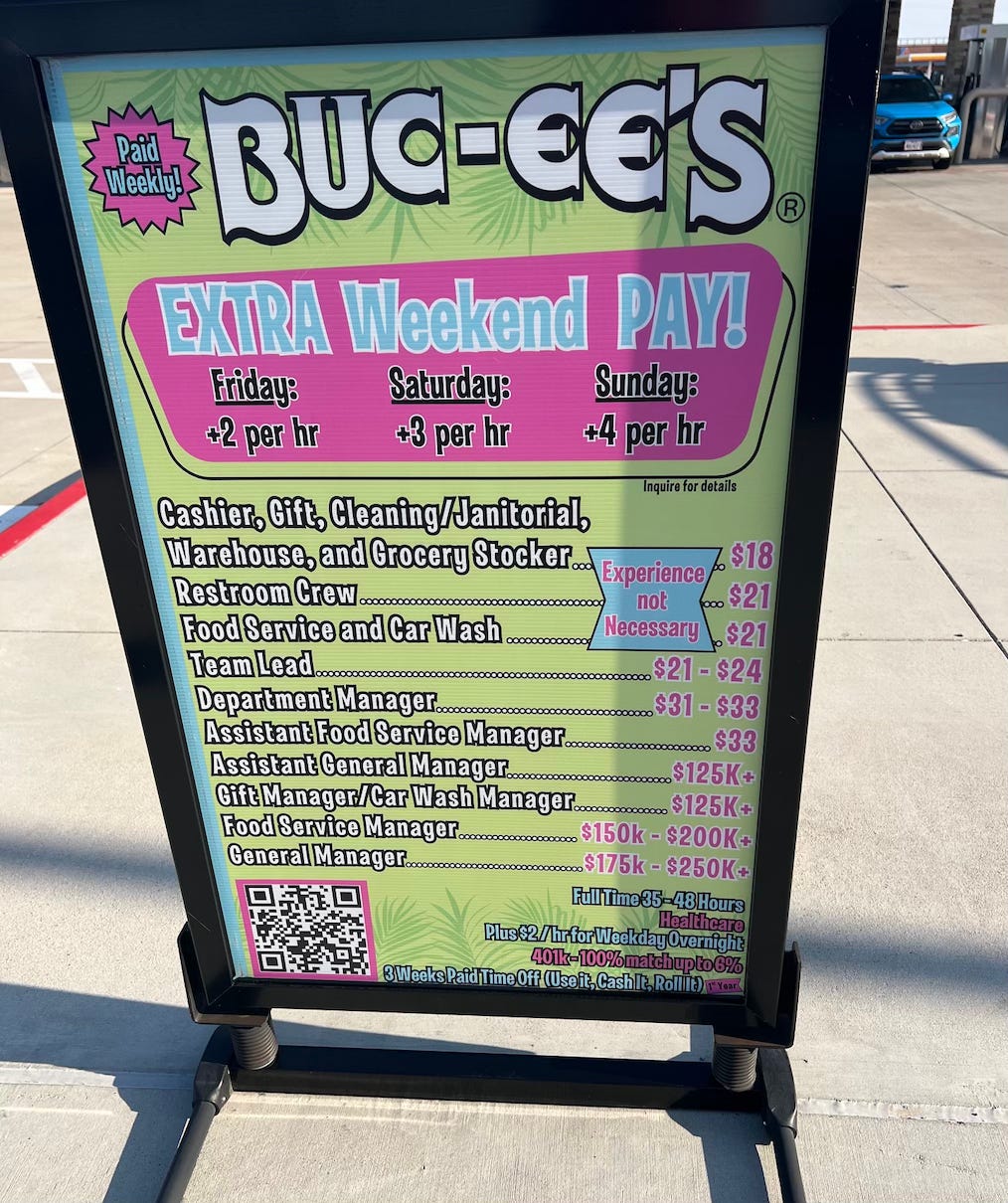
Cashiers and guest service clerks are the last line of defense for retailers, responsible for harvesting the revenue needed to stay in business while giving customers their last and best impression. Not surprisingly, most cashiers are vastly underpaid. This bitter irony encapsulates everything wrong with the grocery industry. Highly productive, skilled workers who interact directly with hundreds of customer every day and handle almost all of the money that grocers take in, yet they have high rates of food insecurity and homelessness, high turnover, high usage of public assistance to make ends meet, and very rarely make livable wages. What a wonderful business model!
Because the overall labor expenditures of this department are so high, grocers have been rolling out more self-checkout operations where 1-2 clerks oversee 5-10 self-checkout stations where customers attempt to ring themselves up and bag their own groceries (and occasionally shoplift). Other technologies, such as Amazon’s “Just Walk Out” technology, have not fared well or produced the return on investment to expand adoption, except in smaller venues like airports or concessions. For the most part, though, front end labor is alive and well, and still the largest single variable expense for grocers.
Labor Expenses = People.
And behind all of these numbers, dollars and percentages are people. The people who feed us all, stock the shelves, count our change, redeem our coupons, field our complaints, and wipe down the conveyor belts. People with families and love lives, taxes, mortgages, health problems, bar mitzvahs and quincieneras, kids and grandkids. They are grocery chains’ greatest assets, but more often than not, are not paid enough to survive, let alone thrive, and are continually harvested for more and more value and productivity that is then redistributed upwards to shareholders, the math weaponized to extract value from every moment of the working day.
Grocery labor is essential to the food supply. We should treat it accordingly.
peace.
(Perspectives are 100% our own and do not reflect sponsors.)

Your knowledge on the subject never ceases to amaze me. As always, thanks for putting this information in a way that I can (almost) comprehend =)
An extremely informative perspective. Thanks for sharing!