

Grocery Update #118: Disconnected: The Consumer Gaps With Ultraprocessed Foods.
And How Retailers and Brands Can Reconnect Them.


Disconnected: The Consumer Gaps With Ultraprocessed Foods.
And How Retailers and Brands Can Reconnect Them.
Reprinted With Permission of The Non GMO Project/Food Integrity Collective.
(Disclosure: Errol Schweizer, Publisher of The Checkout Grocery Update, was a board member of the Non GMO Project for 9 years (2016-2025), launched Non GMO Verification at Whole Foods Market in 2009, and helped them facilitate over 10,000 product verifications while reinvigorating organic and Non-GMO supply chains and infrastructure. The Non GMO Project remains a non-profit committed to a more vibrant and transparent food supply. The Non-UPF Verified Standard is governed by a multi-stakeholder, consensus-based process led by the Non-GMO Project.)
Background: The Non-UPF Verified Standard offers a clear, evidence-based framework rooted in research and aligned with growing consumer demand for transparency in food processing. It identifies products that avoid the core hallmarks of ultraprocessing — including engineered additives and industrial methods that degrade food structure and function. The Non-UPF Standard defines a middle ground where convenience and nourishment can genuinely coexist, giving brands a path to make better food and shoppers a reason to trust it.
Here’s why it matters.
US adults are increasingly aware of the problem of UPFs in the modern food web.
Shoppers already care about the level of processing in their food; as much or more than they are tracking to organic, non-GMO, and other sustainability attributes.
However they lack knowledge on the topic of ultraprocessed foods.
They perceive structural and systemic barriers to avoiding UPFs.
They distrust many sources of food information, especially food companies.
Conversations about the level of processing in our foodways can help reground the concept of sustainability/regeneration in personal and community wellness.
SCOPE AND PURPOSE
In June 2025, the Food Integrity Collective and Linkage Research conducted an online survey of 1,003 adults, a representative and weighted sample of US shoppers. This was conducted in support of the Non-GMO Project’s recently announced non-ultraprocessed food verification program, Non-UPF Verified.
INTRODUCTION
Food exists at the intersection of need and want. The human body requires regular, sufficient nourishment in the form of energy, minerals, vitamins and fiber to sustain both physical and mental health. At the same time, food is a source of deep enjoyment, a sensual pleasure heightened by its quality, seasonality, and the social contexts in which it is grown, prepared and shared.
It is especially troubling, then, when the experience of eating diverges from nourishment altogether. In today’s food environment, taste can be manufactured to feel pleasurable while masking the absence of real sustenance. Certain industrial processes and flavor technologies intentionally amplify the “bliss point” that overrides the body’s natural sense of moderation and satiety. The result is a proliferation of products that deliver concentrated calories and engineered taste while offering little or no genuine nutritional value. These foods create a feedback loop of immediate gratification, disconnected from the qualities that make food both nourishing and truly satisfying.
The term that is coming into focus at this intersection of food design and public health concerns is ultra processed foods, or UPFs.
Though definitions of ultraprocessing have not yet been established in a way that could be consistently applied to individual products, there are a variety of vernacular definitions in circulation, such as products that contain “any ingredients that you would not normally find in a household pantry.” Research has repeatedly confirmed this common perception, with variations that include long ingredient lists, unfamiliar ingredients, artificial colorants and additives or preservatives that may be derived from highly industrialized processes. The perception is that UPFs typically exhibit these characteristics. At the same time, the public is also increasingly aware of the growing scientific consensus that these foods are driving a public health crisis of non-communicable diseases such as obesity, cancer, heart disease, anxiety, depression, cognitive decline, etc.
For consumers, there is a growing concern that many people feel increasingly disconnected from nourishing food and the good health those foods support. How do people describe this sense of disconnection? This report explores shopper perceptions and stories – their beliefs and their behaviors – about UPFs.
What we see is a troubling disconnection in several different but deeply related ways: A disconnection from the intuitive knowledge that good food is nourishing; an aspirational disconnection in realizing and exercising this intuition, due to barriers in the culture and in the marketplace; and an emotional disconnection in the social fabric of trust.
CONTEXT: The growing public conversation about food, nutrition, and health.
Media interest in ultraprocessed foods in modern western diets has been increasing steadily for the past three years. This trend accelerated dramatically in 2024, especially in the run-up to the US presidential election in November, driven in part by presidential candidate, and eventual Secretary of Health and Human Services, Robert F Kennedy Jr. Media coverage increased more than 300% in 2024 compared to the previous year (source: Meltwater, January-December 2024). However, the media interest grew from a steady flow of popular science coverage in trade publications and in bestselling non-fiction books, such as the Dorito Effect (2016), Metabolical: The Lure and the Lies of Processed Food, Nutrition, and Modern Medicine (2021), and Ultraprocessed People (2023).
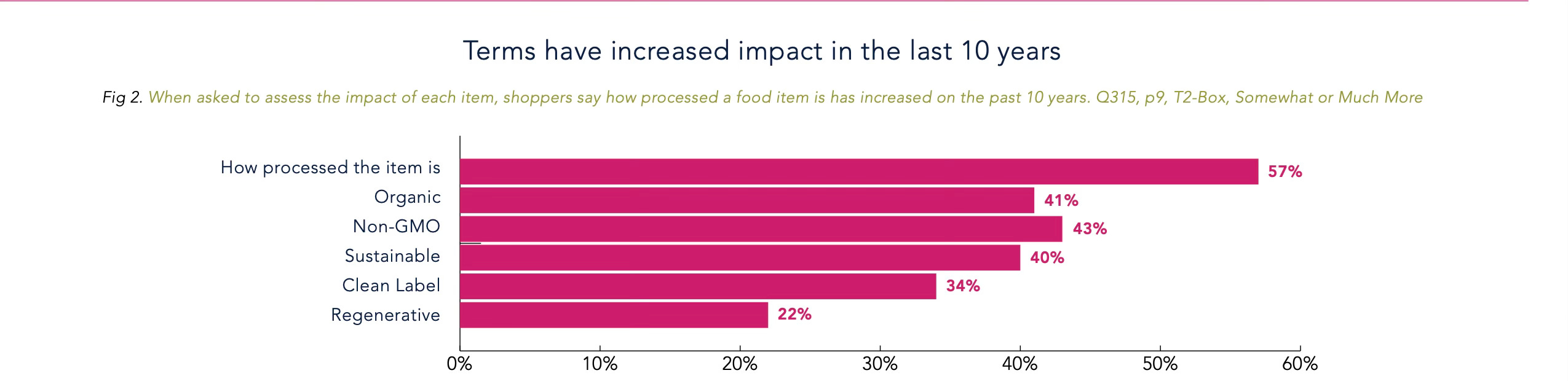
In many respects media interest represented something new to emerge in popular consciousness: the convergence of medical science and food production to describe the emergent public health crises of non-communicable diseases (such as diabetes, obesity and mental health) linked to low-quality diets. Direct survey results show that shoppers are responding to this topic. They report that they are thinking and talking more about the role of processing in food production today than they were 10 years ago, and that level of processing ranks highest among other trending considerations such as organic, non-GMO and regenerative ingredients.
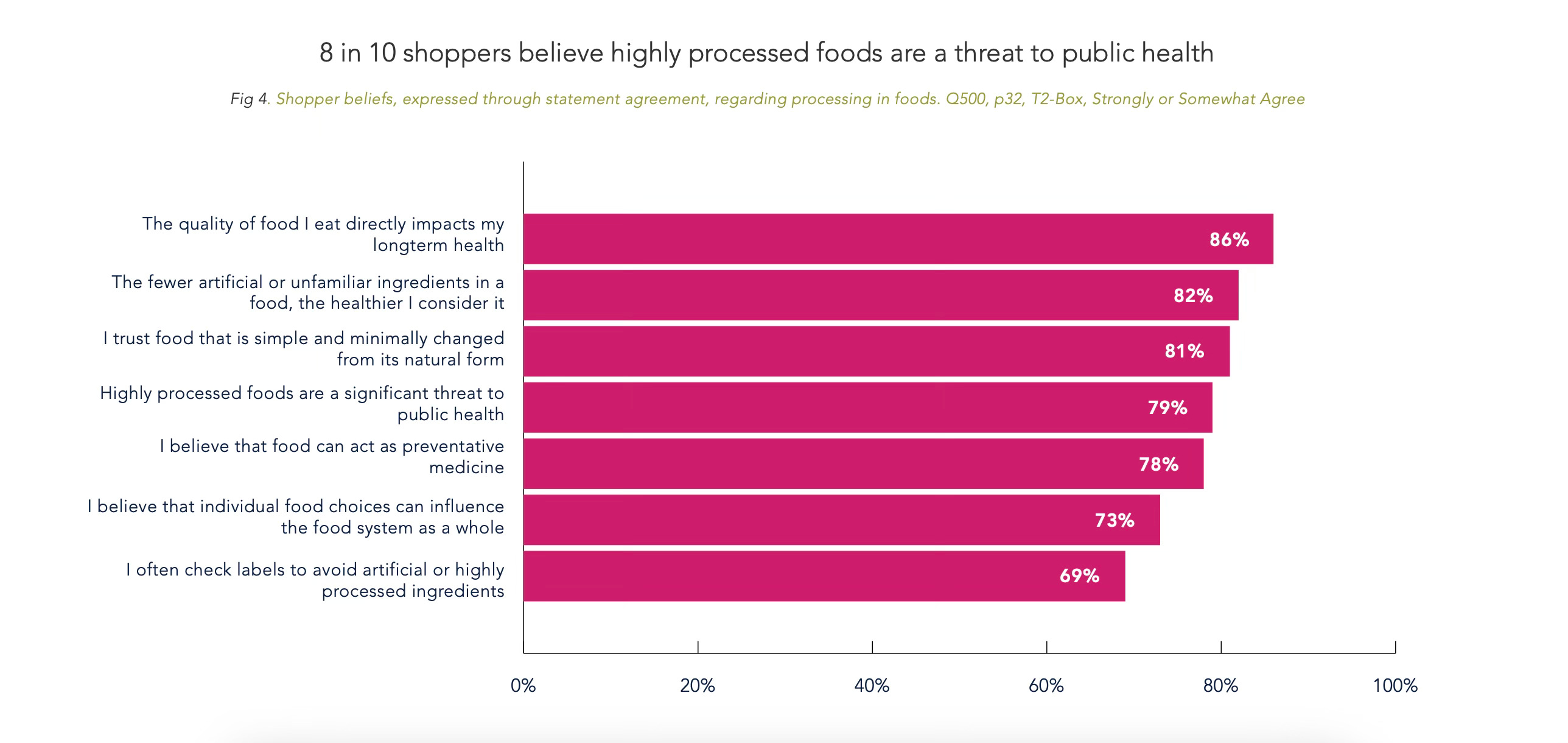
Seven out of 10 US shoppers say they are trying to avoid ultraprocessed foods — even if many feel less confident about how to define or identify them.
This suggests an aspirational gap: Shoppers are aware of the presence and possible consequences of UPFs in their diets to the point where they intuitively try to avoid them, even if their knowledge is limited. It would appear that greater awareness drives a desire for behavioral change.
Some grocery manufacturers are responding to the increase in public awareness, and are already seeking to promote products and amplify ingredients that are “minimally processed.”
According to the Mintel Global New Products Database, minimally processed claims on new products have increased by 30% in the past three years.
Since 2021, an estimated 1,451 new products have been brought to market that are described as minimally processed, or a major ingredient is described that way.
The trend is most prevalent in the processed meat and fish category, but is also noticeable in snacks, prepared meals and entrees, pet food and baked goods (source: Mintel GNPD, January 2022-June 2025).
FOUR DIMENSIONS OF DISCONNECTION
The essential disconnection that can take place in modern western diets is this: The body’s innate ability to recognize and respond to nutritious foods can be circumvented through food design, formulation and manufacturing to overcome natural signals of satiety. A number of ingenious techniques can be used, such as increasing the fat, sugar, and sodium content — but also through processing techniques that modify elements like texture and mouthfeel. While eaters may not be consciously aware of this manipulation, they nevertheless experience a sense of disconnection in four different but related aspects.
DISCONNECTION 1: The Knowledge Gap
Though shoppers’ interest in ultraprocessed food now surpasses their concerns about other attributes, they lack the knowledge they need to act. Confusion about what ultraprocessing means keeps many shoppers from being able to identify basic hallmarks of UPFs, such as highly refined ingredients, artificial sweeteners and hydrogenated oils. A majority even struggle to classify certain food groups that are dominated by ultraprocessed products. For example, just 50% of US shoppers consider soft drinks ultraprocessed — the one category of food from this survey that was most often cited as potentially UPF. Just 19% suspect protein snack bars of being highly processed, even though a typical product may contain such ingredients as maltodextrin, xanthan gum, potassium sorbate and other common components of UPFs.
Further illustrating this knowledge gap, 37% of US shoppers today consider themselves extremely or very knowledgeable about ultraprocessing in food — demonstrating they may not be aware that their knowledge is incomplete.

The good news is that, coupled with their concerns about the level of processing in their food choices, a significant portion (83%) of the population rate themselves as interested and curious to learn more. This represents a striking opportunity for the natural food industry, regulators and retailers to provide resources to close the knowledge gap and empower more shoppers to take action in reducing their intake of UPFs.
A tool such as an on-pack verification, supported by a rigorous standard, could play an essential role in defining key ingredients and processes common to UPFs.
However, broad education would be a critical component to eliminate confusion and increase shopper confidence.
DISCONNECTION 2: The Behavioral Gap
Many surveys of the modern western diet have concluded that a significant portion of our daily diet is made up of highly processed foods, and that children’s diets are especially prone to overexposure (60-70%, respectively). Yet, this data is not represented when individual shoppers are asked to assess their own dietary habits — no doubt partly a result of their own knowledge gap as demonstrated above.
It is striking that even shoppers who describe themselves as familiar with the term “ultraprocessed foods” significantly underestimate their intake of UPFs.
Whether familiar with the term or not, US shoppers estimate that UPFs make up about 20% of their daily caloric intake. On the one hand, this may suggest that they don’t perceive the broader public health concerns about UPFs to be impacting them in their own choices. On the other hand, it compounds the fact that they are clearly having trouble applying limited knowledge to their lived experience. Additionally, they admit to feeling a lack of control, as detailed below.
In previous research, we have asked shoppers to assess their own health in the context of their dietary choices. Younger shoppers, for example, report good overall physical health but cite higher levels of concern about anxiety and depression (source: Linkage 2023). Older shoppers may report concerns about joint pain, gastric discomfort and other types of inflammation. So while the association between diet and health has been well established (nearly 90% make this association), the notion appears to be more theoretical than practical when applied to individual food choices.
This may also reflect the reality that aspirations to eat better are often frustrated in practice. There is little doubt that the availability, convenience, palatability and relatively low price of many UPFs plays a significant role in amplifying this behavioral gap.
Other important barriers exist as well (see, “Disconnections: Control & Social Isolation”). However, an effort to provide shoppers with the resources they need to better understand ultraprocessing, identify hallmarks of highly processed foods, and exercise a conscious and informed choice around the issue could help close this behavioral gap.
DISCONNECTION 3: Trust
Another key disconnection for Americans today is the steep decline in trust, especially in governments, institutions and major corporations.
Our age of polarization has narrowed the circle of trust concentrically toward the individual, and perhaps exaggerated Americans’ sense of self-reliance while damaging their trust in larger social structures like government and business. This impacts the food system in several important ways.
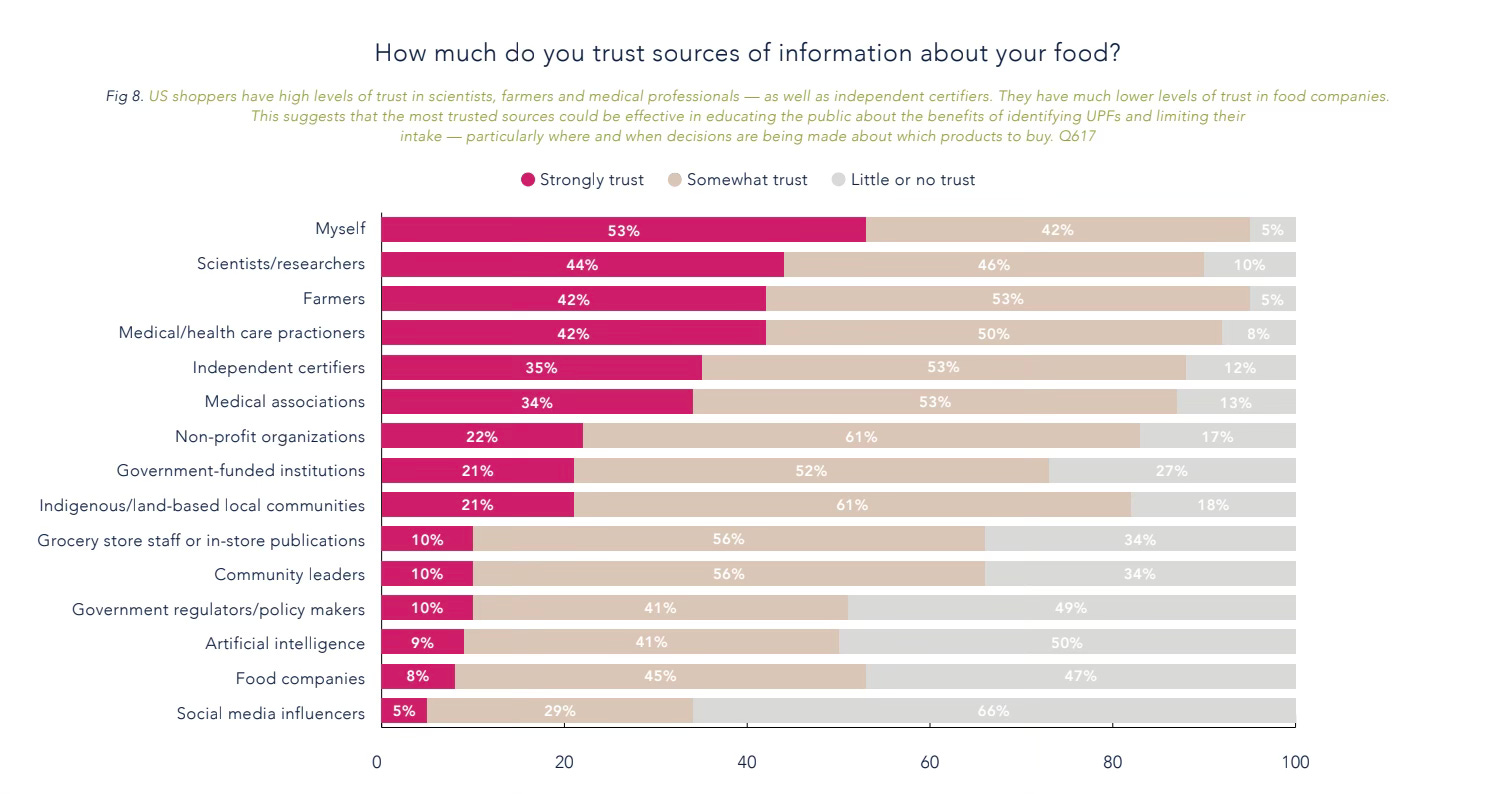
Foremost it amplifies an entrenched skepticism about marketing and promotion, portraying large food manufacturers as sacrificing public interest for the purpose of maximizing profits. Interestingly, the public’s trust in farmers is quite high, revealing a rift between where and how food is grown and the point-of-sale in a grocery store. Manufacturers then become a locus of distrust, not just due to industrialized processes and distribution, but through marketing and promotion efforts undertaken by food brands. Thus, for example, growing interest in sustainability has been counterbalanced by increasing cynicism about greenwashing. And while slightly more than half of all shoppers are regularly scrutinizing nutritional labels and ingredient lists, that does not mean they automatically trust the information they find.
When shoppers were asked to rate their level of trust across a number of information sources with respect to their food choices, food manufacturers themselves were ranked alarmingly low, just above social media influencers, and below government and artificial intelligence.
In the potentially chaotic context of grocery shopping, it’s clear that shoppers could benefit by having access to resources they trust.
The relationship between social connection (trust) and individual choice (aspirational behavior) is a critical area where bridges can be built to overcome two disconnections at once.
DISCONNECTION 4: Control & Social Isolation
In addition to public distrust around the intentions of key stakeholders in the food system, shoppers also feel a sense of disconnection in their own agency. They feel the most confident when they know how a product was made, but this appears to be a fleeting experience. As a result, nearly two-thirds of US adults wish they had more control over what’s in the food they buy. This perceived lack of control undoubtedly contributes to their distrust of food manufacturers, who they see as transactionally self-interested in ways that may be at cross-purposes to shopper preferences.
However, other barriers to personal agency, including systemic and cultural factors, are also consequential. In our research, 55% of our respondents identified cost and time constraints as impeding their ability to make better food choices — both of which are serviced, it should be noted, by the convenience and availability of low-cost, low-quality foods.
Access also plays a role, with 34% of respondents indicating that nutritious and/or minimally processed foods are not readily available where they live.
Surprisingly, 40% believe that their diets are a matter of luck — shaped less by choice than circumstance, like proximity to a good store or the social support to get help with meals. Finally, 3 out of 5 survey respondents agree that eating well requires community or family support, and that doing it alone is difficult. These last two data points suggest that shoppers intuit that barriers can more easily be overcome when they are undertaken collectively and socially. This is a recognition of the value of social connection in an age of isolation — which is a growing concern that extends beyond food culture. There is something gratifying in seeing in this data what individuals know at their core: That when it comes to food choices, the disempowerment and loss of autonomy inherent in an industrialized system may be overcome through familial and social ties.
THE CONFLUENCE OF NON-UPF AND NATURAL SHOPPERS
The movement to expand access to non-UPF foods is likely to mirror the trajectory of the organic and non-GMO movements, and serve the same values for many of the same individuals and communities.
Rising concern about the prevalence of UPFs extends the sustainability conversation from environmental and planetary regeneration to the regeneration of personal health.
In many respects, this regrounds the natural products industry with a more holistic lens. Put simply, authentic sustainability begins with personal sustainability: the physical, mental and emotional health of the shopper and eater, supported by foods that are less processed, i.e. closer to their natural state.
Accordingly, the nascent non-UPF movement is likely to be closely aligned with the organic and non-GMO community, the clean label movement, and adjacent efforts such as fair trade, upcycled initiatives, and regenerative practices.
POTENTIAL VALUE OF A THIRD-PARTY CERTIFICATION
Navigating the current food system from the perspective of the individual shopper can be ambiguous, complex and confusing. In the case of UPFs, people are already engaged, thanks in large part to current public discourse in media, popular science and policy discussions. Public interest in ultraprocessed foods is on par with their interest in organic, non-GMO and regenerative food choices. However, the food system remains both complex and opaque to most shoppers. Even those who are highly motivated to avoid UPFs struggle to make the right choices — concern alone doesn’t translate into effective action. Unfortunately, manufacturers and regulators are deeply distrusted, and may not be effective sources for guidance on avoiding UPFs.
Perhaps more to the point, there is not yet a universally accepted definition of ultraprocessed foods, though shoppers do appear to recognize some hallmarks.
Just as shoppers cannot independently identify whether a product is organic or non-GMO, they also have no way to evaluate its level of processing. And like organic and non-GMO (and numerous other programs such as Fair Trade, Gluten Free, Vegan, etc.) certifiers play an vital role in establishing a successful model for shopper support; independent certifiers are highly trusted, on par with farmers, scientists and medical experts. In our survey, shoppers say they would find a clear, credible, independent certification valuable, and it would significantly impact their intent to purchase a product (See Figs 13-14). Such a program would translate concern into a practical shopping resource, helping retailers and brands earn trust, and establishing meaningful definitions and standards to a confusing landscape. A certification could provide a clear way-finder for shoppers seeking to avoid UPFs, helping to bridge intentions with action.
CONCLUSIONS
This data clearly shows that awareness of and sensitivity to the issue of processing in our food web is high. Media coverage and popular science have highlighted the significant consequences and externalized costs attributable to how our food is grown, distributed, and manufactured. Until recent years, the industry and its constituents have focused on the environmental impacts of how food is grown or produced at the level of the farm or ranch. Despite modern agricultural practices like concentrated animal feeding operations, GMO monocropping, synthetic pesticides and chemical fertilizers, public trust of farmers remains high.
Even as these environmental concerns remain, there has always been a segment of the population that looks at modern agricultural practices through the lens of negative impacts on personal health (hence the “health food” movement of the 1960s and 1970s that drove the growth first of modern organic and non-gmo production, expanded to sustainable aquaculture, and later incorporated issues like social and economic sustainability such as Fair Trade and corporate social responsibility). Now, emerging science is implicating the actual manufacturing processes and the formulation of foods after they leave the farm, ranch, grain mill and stockyard, putting food manufacturers directly in the line of shopper scrutiny. Manufacturers exist in the liminal space between food growers (farm) and food eaters (fork), and their adoption of industrialized processing techniques and industrialized ingredients is being examined as a likely source of significant public health concerns, as poor diets become the single biggest contributor to preventable death globally.
The growing body of scientific inquiry into the health impacts of poor diets is emergent. However, the topic is as complex as our food system itself, and while awareness may be high in the population, knowledge is low. And yet, the science is sufficient to begin educating the public about some basic truths: Whole and minimally processed foods, prepared in healthy ways and portions, clearly lead to better health outcomes. And, while modern lifestyles put a premium on convenience and affordability, prioritizing these at the expense of personal health costs us dearly.
In the US, there is a growing awareness of the health impacts of industrialized food production. Many shoppers and eaters are eager to exercise their agency to make better food choices. And yet, they perceive real barriers to informed choice — they don’t feel particularly well-informed, and they don’t always feel they have good choices. Other barriers include accessibility — the local availability of whole or minimally processed foods — as well as sufficient time and financial resources to eat nourishing and culturally-appropriate food.
In this way, a responsive food industry will make the most of this opportunity to develop more non-UPF options in packaged and processed foods – but also to do the difficult work of educating shoppers not just about the dangers of UPFs, but about the benefits of seeking out more wholesome and nutritious foods. A more expansive and holistic view of sustainability must inevitably return to ground zero: sustaining the individual’s physical, mental, and emotional health. A society that regenerates its own health in this way invariably benefits all other systems in growing the living planet’s capacity to thrive.
»RECOMMENDATIONS:
Reconnecting Shoppers To Food Integrity
The findings of this report highlight significant disconnections between US shoppers and their food system. While concerns about ultraprocessed foods (UPFs) are rising, knowledge gaps, behavioral challenges and systemic barriers hinder progress toward healthier and more sustainable choices.
To address these challenges, stakeholders across the food system can take practical steps to rebuild trust, close knowledge gaps and empower shoppers.
1. ADDRESS THE KNOWLEDGE GAP
Challenge: Shoppers lack clarity on what qualifies as an ultraprocessed food, even as they report high concern.
Opportunities for action:
• Brands: Use plain-language communication on packaging. Highlight less processed ingredients and explain processing in transparent terms.
• Retailers: Provide shelf tags, in-store signage and digital resources that explain what UPFs are, and empower shoppers to identify them.
• Certifiers: A Non-UPF certification supported by clear standards and educational campaigns could help shoppers feel more confident in their choices, but may have to address vernacular expectations (e.g., “only ingredients I could find in my own pantry”).
• Policy Makers: Support development of consistent definitions and labeling frameworks for UPFs to reduce confusion.
2. CLOSE THE BEHAVIORAL GAP
Challenge: Shoppers want to avoid UPFs, but face systemic barriers (time, cost, convenience).
Opportunities for action:
• Retailers: Increase availability and promotion of less processed options, including affordable store-brand items. Elevate and amplify in-store experts, (e.g., staff nutritionists, dieticians, local Food as Medicine activists).
• Brands: Reformulate existing products to reduce reliance on artificial or highly refined ingredients. Where manufacturing processes reduce the nutritional value of ingredients, explore other options.
• Community partners: Develop cooking education programs that teach practical skills for identifying and preparing less-processed meals in ways that could still provide convenience and affordability.
• Policy makers: Incentivize access to healthier options through subsidies, procurement standards and public health programs such as produce prescriptions.
3. REBUILD TRUST
Challenge: Shoppers express low levels of trust in food companies, but high trust in farmers, scientists and independent certifiers.
Opportunities for action:
• Brands: Partner with trusted stakeholders (scientists, nutritionists, farmers) to co-develop messaging and standards.
• Certifiers: Maintain independence and transparency, positioning certification as a trustworthy signal at point of purchase.
• Educators & NGOs: Elevate scientific and farmer voices in public communications, ensuring the messengers align with sources shoppers already trust.
• Policy makers: Incorporate public feedback and promote bipartisan support in regulatory actions; lead with farmers, medical professionals and nutritionists in establishing subject matter expertise from trusted sources.
4. INCREASE AGENCY AND REDUCE
SOCIAL ISOLATION
• Challenge: Shoppers feel they lack control over what’s in their food, and many lack the social or community support they need to eat well.
• Opportunities for action:
• Retailers: Create in-store community events, food demos and peer-to-peer learning opportunities that make healthier eating social and accessible.
• Brands: Share transparent sourcing and processing stories that highlight human connection, not just product features.
• Community organizations: Build collective food programs (e.g., community kitchens, co-ops, buying clubs) to lower barriers of cost and access.
• Policy makers: Invest in local food infrastructure to increase access to less processed foods in underserved areas.
THE PATH FORWARD
The crisis of ultraprocessed foods cannot be solved by individual shoppers alone.
It will require systemic responses that reconnect people to nourishing, trustworthy and less processed food.
By working together across the supply chain — brands, retailers, educators, certifiers and regulators — the food system can empower shoppers to make healthier choices and redefine sustainability as both environmental and human regeneration.
peace,
(Perspectives do not reflect sponsors.)
I had to read this right away - I have strong opinions about certifications :) The points you make are strong, and I appreciate how you bring up the structural barriers that keep people from cooking and eating the way they want to. But I can’t help thinking this kind of certification could make things even murkier for shoppers. We’ve already watched non-GMO labels land on foods that never had GMO versions to begin with, which creates the impression that something scary is being avoided. A non-UPF label feels like it could slide into that same territory - and become a powerful sales tool more than anything.